Rating: ★★★★★ (5/5)
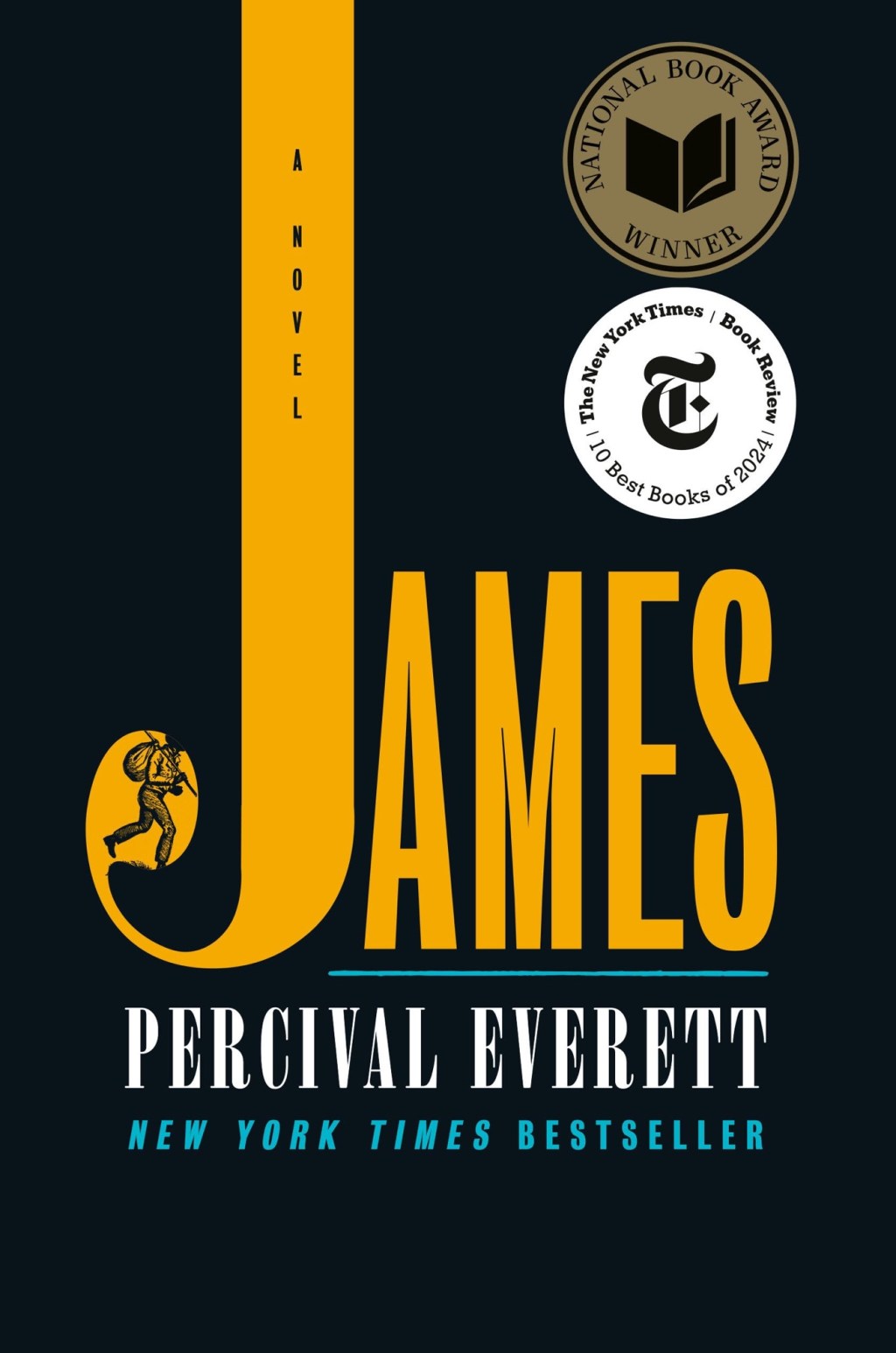
Percival Everett’s James is a masterful literary feat that reimagines Mark Twain’s The Adventures of Huckleberry Finn, this time centering on Jim, the enslaved man who was originally a supporting character in Twain’s novel. Everett does not simply retell the story—he transforms it. By shifting the perspective from Huck to Jim, James becomes an urgent, profound, and deeply moving narrative about agency, intelligence, and survival in a world structured to deny Black people their humanity.
The novel does something remarkable: it takes a text that has long been debated for its handling of race and, without rejecting Twain’s work outright, reclaims the story to illuminate the full depth of Jim’s experiences. Everett gives him a rich, intellectual, and fully realized interior life, one that challenges the often simplistic way he has been historically depicted. James is not just a corrective to Huckleberry Finn—it is a masterpiece in its own right, deserving of all the accolades and attention it has received.
Plot Overview: A Familiar Story, Radically Transformed
The basic premise of James mirrors that of Huckleberry Finn: Jim is on the run, attempting to escape slavery while navigating the perils of antebellum America. However, where Twain’s novel is told through the voice of Huck, a white boy, Everett lets Jim tell his own story.
From the beginning, Jim is revealed to be literate—something he has kept secret for his own survival. When he overhears that he is to be sold to a new plantation in New Orleans, permanently separating him from his wife, Lizzie, and daughter, Sadie, he knows he must escape. He flees, encountering Huck Finn along the way, and together they navigate the dangers of the Mississippi River, conmen, slave catchers, and the ever-present threats of racism and brutality.
But while Huckleberry Finn treats Jim as a sidekick in Huck’s coming-of-age journey, James puts Jim’s experiences, emotions, and intellect at the forefront. His thoughts on freedom, philosophy, and human nature are explored in a way that makes it clear: Jim has always been more than the “comic relief” or sentimental figure he is often reduced to in Twain’s novel.
Jim as a Fully Realized Character
The greatest triumph of James is its protagonist. In Twain’s novel, Jim is often depicted through the lens of Huck’s limited understanding—he is kind, loyal, and superstitious, but rarely given full autonomy. Everett’s Jim is a stark contrast: he is deeply introspective, intelligent, and strategic in his thinking. He has secretly taught himself to read and write, and he engages with literature and philosophy, contemplating thinkers like Voltaire, Rousseau, and Douglass.
Everett makes a powerful statement in doing this. Jim is not just an illiterate fugitive seeking freedom—he is a man of profound intellect and self-awareness who must constantly mask his intelligence to avoid suspicion. In one particularly striking moment, Jim reflects on how dangerous knowledge can be for an enslaved person, noting that revealing his ability to read could get him killed. The burden of playing dumb, of pretending to be less than he is, adds an additional layer of psychological tension to his journey.
Jim’s internal monologue is filled with wisdom, wit, and sharp social critiques. He is fully aware of the hypocrisy of the society around him, of the absurdity of the justifications for slavery. His frustration with Huck’s naivety is evident, but so is his understanding that Huck, too, is a product of the world he was born into.
Huck Finn: A More Complicated Companion
Everett does not erase Huck from the narrative, but he does reframe him. In Twain’s original, Huck is seen as a boy with a good heart, slowly unlearning the racism he was raised with. In James, Huck is still sympathetic in many ways, but his prejudices and limitations are made clearer. Jim sees Huck for what he is—someone who wants to be good but who still holds the biases of his upbringing.
There are moments in the novel where Huck’s inability to fully see Jim as his equal is frustrating. He grapples with his belief that helping Jim escape is somehow “wrong,” even as he cares for him. While Twain’s novel frames Huck’s decision to help Jim as a moral triumph, James makes it clear that real change is far more complicated. Jim cannot afford to wait for Huck to fully unlearn his racism—his survival depends on his own wit and resilience.
Themes: Identity, Freedom, and the Power of Storytelling
At its core, James is a novel about identity and autonomy. Jim’s story is one of constant negotiation—between his intelligence and the need to hide it, between his personal desires and the ever-present threat of white violence. Unlike Huck, whose journey is largely about self-discovery, Jim is fighting for something much more urgent—his life, his family, and his right to exist as a free man.
One of the most powerful aspects of James is its meditation on the nature of freedom. Jim’s goal is not just to escape slavery, but to reunite with his family. Unlike Huck, who seeks escape from an abusive father and the restrictions of “civilization,” Jim’s freedom is incomplete if his loved ones remain in bondage. This stark contrast highlights the fundamental difference in their stakes—while Huck’s problems are real, they are not existential in the same way Jim’s are.
Everett also explores the power of language and storytelling. By allowing Jim to narrate his own tale, the novel reclaims a voice that was previously filtered through a white perspective. Jim’s ability to read and his understanding of literature symbolize something larger: the right of Black people to tell their own stories, to define themselves rather than be defined by others.
Writing Style and Structure
Everett’s prose is both lyrical and sharp, capturing the dialect and cadence of the time while infusing Jim’s narration with intelligence and warmth. The novel retains the episodic structure of Huckleberry Finn, but each encounter carries deeper weight when seen through Jim’s eyes. The humor present in Twain’s work is still here, but it is often tinged with irony and bitterness, reflecting the harsher realities Jim faces.
The pacing is steady, with each chapter offering new challenges and revelations. The dialogue is crisp and natural, and Everett’s ability to balance historical authenticity with modern sensibilities is impressive. He does not modernize Jim’s voice in a way that feels anachronistic, but he does ensure that Jim’s intelligence and depth shine through.
Impact and Reception
James has been met with widespread critical acclaim. It was shortlisted for the Booker Prize and has been praised for its depth, originality, and emotional power. Critics have highlighted Everett’s ability to blend philosophical inquiry with compelling storytelling, making the novel both thought-provoking and deeply engaging.
Many reviewers have noted that James is not just a response to Huckleberry Finn, but a novel that stands on its own as a literary achievement. While it engages with Twain’s work, it does not require readers to be familiar with it to appreciate its brilliance.
Final Verdict
James is an essential read. It is a novel that not only reclaims a historically marginalized voice but does so with immense skill, insight, and power. By centering Jim’s story, Everett challenges long-standing literary traditions and offers a perspective that feels both necessary and overdue.
For those who appreciate historical fiction, literary reimaginings, or novels that grapple with race and identity in America, James is a must-read. Percival Everett has crafted a masterpiece—one that will undoubtedly be discussed, studied, and celebrated for years to come.
Final Rating: 5/5 – A brilliant, necessary, and deeply moving novel.



 Book Reviews Online
Leave a comment