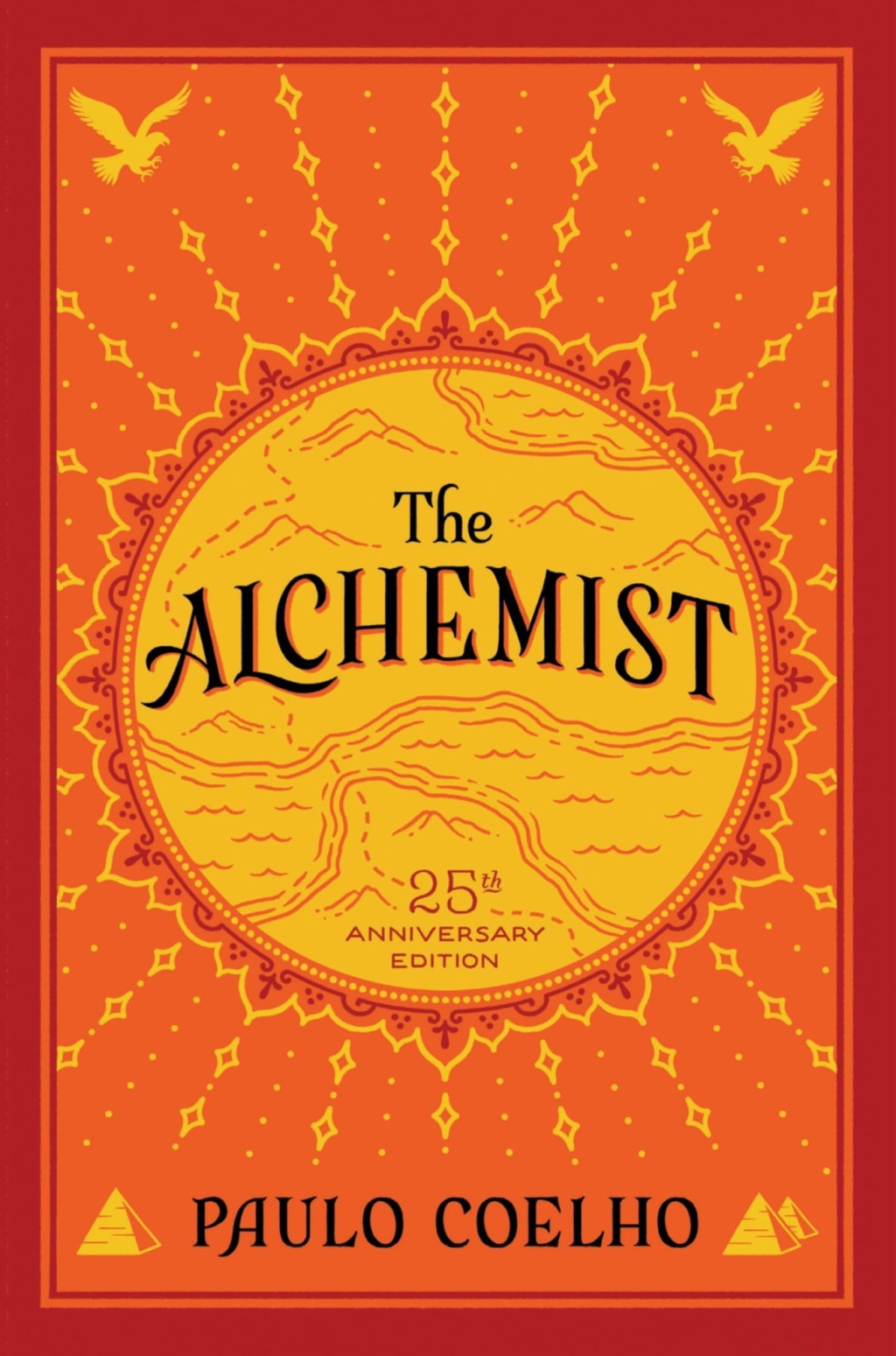
Author: Paulo Coelho
Rating: ★★★★☆ (4 out of 5 stars)
Paulo Coelho’s The Alchemist is one of the most beloved novels of modern literature, translated into over 80 languages and read by millions. First published in 1988, this modern classic continues to captivate readers with its poetic simplicity and profound life lessons. At its core, The Alchemist is about following your dreams, listening to your heart, and trusting the journey of life. In this review, we’ll explore why this spiritual adventure has become a global phenomenon, its biggest strengths, and whether it lives up to the hype.
Overview of The Alchemist
The story follows Santiago, a young Andalusian shepherd boy who dreams of discovering a treasure hidden near the Egyptian pyramids. Motivated by a recurring dream and a mysterious encounter with a king named Melchizedek, Santiago sets off on a journey across deserts and continents to pursue what Coelho calls his “Personal Legend”—a term representing one’s true purpose or destiny in life.
As Santiago travels from Spain to North Africa, he meets a range of mystical and symbolic figures: a crystal merchant, an Englishman studying alchemy, a desert woman named Fatima, and eventually, an alchemist who guides him toward enlightenment. Each of these encounters serves as a metaphorical lesson about fear, love, faith, and the importance of staying true to your path—even when it’s difficult.
Core Themes and Philosophical Lessons
1. Follow Your Personal Legend:
The central message of The Alchemist is that every person has a “Personal Legend”—a unique destiny that, when pursued, leads to fulfillment and meaning. Santiago’s quest is an allegory for our own personal journeys in life.
2. Listen to Your Heart:
Coelho emphasizes the importance of intuition and inner wisdom. Santiago is constantly reminded to “listen to his heart,” a message that encourages readers to trust their instincts rather than be paralyzed by fear.
3. The Universe Conspires to Help You:
One of the most quoted lines from the book is: “When you want something, all the universe conspires in helping you to achieve it.” This optimistic belief in universal alignment fuels the novel’s inspirational tone.
4. The Journey is the Treasure:
Though Santiago initially believes the treasure lies in a physical place, he eventually learns that the true reward is found in the lessons, growth, and experiences gained along the way.
5. Overcoming Fear and Doubt:
Fear is the biggest obstacle between people and their dreams. Santiago’s struggles reflect the internal battles we all face—doubt, uncertainty, and the temptation to settle for comfort.
Writing Style and Literary Qualities
Paulo Coelho’s writing is simple, lyrical, and rich with metaphor. The prose reads like a modern-day fable, accessible to readers of all ages. This simplicity is one of the book’s biggest strengths—it delivers profound spiritual truths without complexity or jargon.
However, this style is also where some readers find fault. Critics argue that the book can be overly simplistic or preachy. While the story is deeply symbolic, those looking for gritty realism or complex character development may find it lacking.
Still, for those open to its message, The Alchemist offers a poetic and meditative reading experience that lingers long after the last page.
Who Should Read The Alchemist?
This book is ideal for:
Readers seeking inspiration and spiritual guidance Fans of philosophical fiction and allegorical stories Anyone at a crossroads in life, career, or purpose People who enjoy books like Siddhartha, Jonathan Livingston Seagull, or Tuesdays with Morrie Young adults and first-time readers of personal development fiction
The Alchemist makes an excellent gift or book club selection due to its universal themes and thought-provoking quotes. It’s also a great re-read—many people return to it at different stages in life and find new meaning each time.
Critiques and Considerations
While The Alchemist is adored by many, it’s not without detractors. Some readers feel that the story is too simplistic or idealistic, and that it glosses over real-world hardships with mystical optimism. Others find the prose repetitive or the spiritual lessons too familiar if they’ve already read a lot of self-help literature.
Still, it’s important to view The Alchemist as a fable, not a gritty novel. Its purpose isn’t to mirror reality exactly but to offer hope, perspective, and a framework for navigating life’s journey.
The Global Impact of The Alchemist
The Alchemist has become more than a book—it’s a cultural touchstone. Endorsed by celebrities like Will Smith, Pharrell Williams, and Oprah Winfrey, it’s credited with inspiring countless people to chase their dreams and rethink the meaning of success.
Its widespread popularity is a testament to its universal message. Whether you’re a student, entrepreneur, artist, or spiritual seeker, Santiago’s quest echoes the longing we all feel—to live a life of purpose.
Final Thoughts: Is The Alchemist Worth Reading?
Definitely. The Alchemist by Paulo Coelho is a timeless, soul-stirring novel that reminds us of the power of dreams, the importance of following our intuition, and the beauty of the journey. While not everyone will resonate with its mystical tone or allegorical style, those who do will find it deeply inspiring.
If you’re seeking clarity, courage, or simply a reminder that life has meaning beyond material success, this book is for you.
Final Rating: 4 out of 5 stars
Beautiful, profound, and deeply personal—The Alchemist is a must-read for anyone ready to pursue their own Personal Legend.



 Book Reviews Online
Leave a comment