
Author: Cal Newport
Rating: ★★★★★ (5 out of 5 stars)
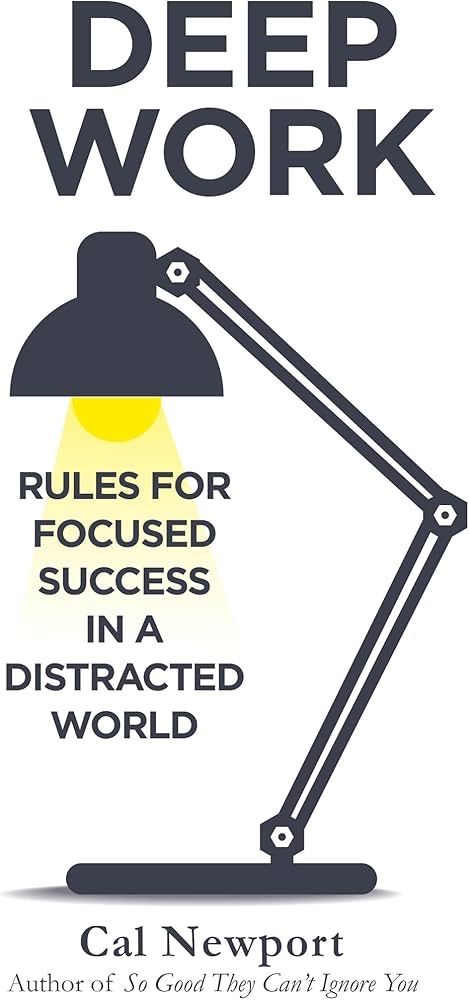
In an age where constant pings, scrolling, and multitasking have become the norm, Deep Work by Cal Newport delivers a much-needed antidote. With clarity, structure, and scientific reasoning, Newport outlines why focused, undistracted work is the most valuable skill of the 21st century—and how mastering it can set you apart personally and professionally. In this review, we’ll break down the key principles of Deep Work, what makes it a must-read, and how it can dramatically improve your productivity and cognitive performance.
Overview of Deep Work
Published in 2016, Deep Work: Rules for Focused Success in a Distracted World presents a simple yet profound thesis: the ability to perform “deep work”—intensely focused sessions without distraction—is becoming increasingly rare and increasingly valuable in our digital economy.
Cal Newport, a professor of computer science and productivity expert, divides the book into two main parts:
Part 1: The Idea – Explores why deep work matters and how it leads to high-quality output and career success. Part 2: The Rules – Offers actionable strategies to cultivate deep work and eliminate distractions from your life.
Whether you’re a creative professional, entrepreneur, student, or corporate worker, Newport argues that your ability to concentrate without interruption is the ultimate edge in a noisy world.
Key Takeaways and Lessons
1. Deep Work vs. Shallow Work:
Newport defines deep work as cognitively demanding tasks done in a state of full concentration, without distractions. These efforts create real value and are difficult to replicate. In contrast, shallow work includes emails, meetings, and administrative tasks—low-value activities that dominate most modern schedules.
2. The Deep Work Hypothesis:
He argues that the most successful and fulfilled individuals are those who prioritize deep work. As automation and globalization advance, the ability to learn quickly and produce at an elite level is what sets professionals apart.
3. Embrace Boredom:
To train your brain for deep work, Newport suggests practicing boredom. Don’t reach for your phone at every idle moment—instead, allow your mind to wander and build mental resilience.
4. Quit Social Media:
One of the more controversial pieces of advice is Newport’s call to quit (or drastically reduce) social media use. He argues that these platforms are designed to fracture your attention and provide minimal professional benefit.
5. Work Deeply with Routines and Rituals:
Creating a deep work schedule or ritual—specific hours, locations, and methods—helps your brain enter the flow state more easily. Newport provides real-life examples from authors, CEOs, and researchers who use strict routines to produce outstanding work.
6. The 4 Disciplines of Execution:
To implement deep work, Newport borrows from business strategy and introduces these four disciplines:
Focus on the wildly important Act on lead measures Keep a compelling scoreboard Create a cadence of accountability
These principles help track progress and keep your goals aligned with deep work values.
Writing Style and Structure
Newport’s writing is clear, precise, and academically grounded but accessible. He supports his points with a mix of scientific studies, historical examples (like Carl Jung and Isaac Newton), and anecdotes from modern professionals. The tone is professional and motivational without being preachy.
The book is well-structured, making it easy to follow. Each chapter includes summaries, practical tips, and examples, which makes the content highly actionable. It’s the kind of book you’ll want to highlight, return to, and recommend to others.
Who Should Read Deep Work?
This book is especially valuable for:
Knowledge workers, writers, coders, and researchers Entrepreneurs and business professionals Students and academics Creatives looking to improve their focus and output Anyone feeling overwhelmed by digital distractions
If you’re struggling with productivity, overwhelmed by shallow tasks, or feel like your creative potential is slipping away due to constant interruptions, Deep Work will be an eye-opener.
Critiques and Considerations
While Deep Work has been widely praised, a few criticisms are worth noting. Some readers feel the advice to abandon social media is unrealistic or extreme—especially for those in marketing or client-facing roles. Others may find Newport’s rigid stance on time-blocking and productivity systems difficult to apply in flexible or unpredictable work environments.
Still, the overall message remains powerful: in a world of diminishing attention spans, your ability to focus deeply is your most valuable asset.
Cultural Relevance and Lasting Impact
Since its release, Deep Work has become a cornerstone of the productivity movement. It’s frequently cited by tech leaders, productivity coaches, and self-improvement influencers. The book’s principles have inspired thousands to delete social apps, adopt time-blocking, and rethink how they engage with their work.
More than just a productivity guide, Deep Work touches on deeper philosophical themes about craftsmanship, meaning, and what it means to create something of lasting value in the digital age.
Final Thoughts: Is Deep Work Worth Reading?
Absolutely. Deep Work by Cal Newport is one of the most important productivity books of the modern era. It doesn’t offer gimmicks or shortcuts—instead, it challenges you to cultivate discipline, focus, and intentionality in your work and life.
Whether you implement all of Newport’s strategies or just a few, this book will change how you approach time, distraction, and creative output. If you want to do more meaningful work in less time and with greater satisfaction, Deep Work is an essential read.
Final Rating: 5 out of 5 stars
Insightful, actionable, and highly relevant—Deep Work is a game-changer for anyone serious about thriving in a distracted world.
 Book Reviews Online
Leave a comment