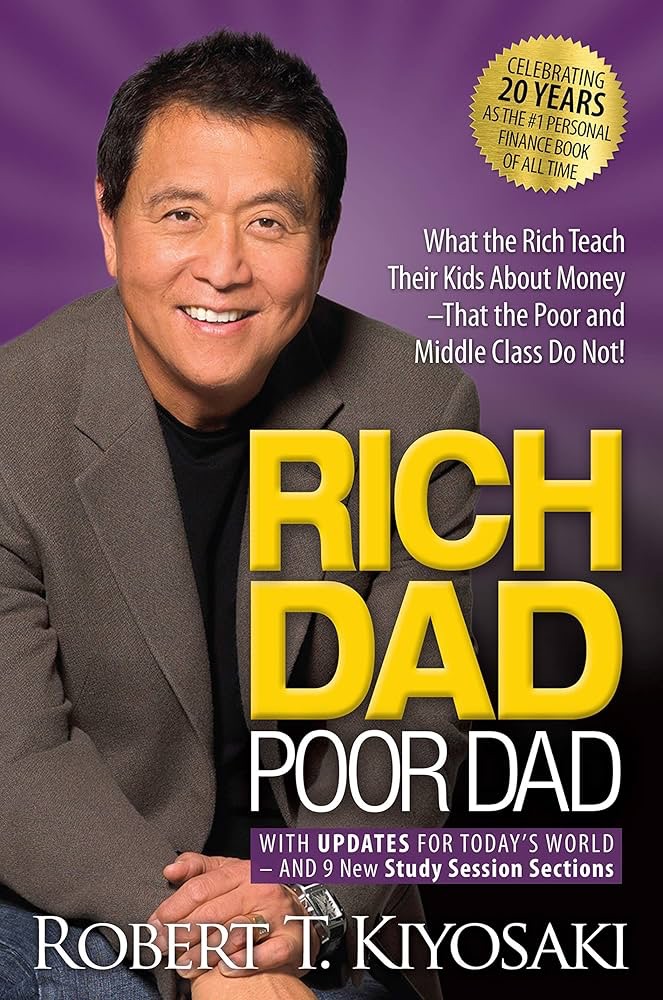
Author: Robert T. Kiyosaki
Rating: ★★★★☆ (4 out of 5 stars)
Rich Dad Poor Dad by Robert T. Kiyosaki is more than just a personal finance book—it’s a mindset revolution. First published in 1997, this best-selling classic continues to inspire millions by challenging conventional ideas about money, wealth, and financial education. Kiyosaki presents a compelling narrative based on his two “dads”—his biological father (the Poor Dad) and the father of his childhood best friend (the Rich Dad). Their differing philosophies on work, education, and investing form the foundation of this thought-provoking guide to financial freedom.
Overview of Rich Dad Poor Dad
The book explores how the way we think about money—more than how much of it we make—determines our long-term success. The Poor Dad believes in traditional paths: go to school, get a good job, work hard, and retire with a pension. The Rich Dad, on the other hand, teaches Kiyosaki that financial literacy, investing, and building passive income are the keys to true wealth and independence.
Through storytelling and simplified financial concepts, Kiyosaki encourages readers to shift from being employees and consumers to becoming investors and entrepreneurs.
Key Takeaways and Lessons
1. The Rich Don’t Work for Money
Kiyosaki flips the script: instead of working for a paycheck, he encourages readers to make money work for them. This means investing in income-producing assets rather than relying on earned income alone.
2. Financial Education Is Essential
School teaches math, history, and science—but rarely teaches how money works. Kiyosaki emphasizes the importance of learning about taxes, debt, investing, and financial statements to take control of your financial life.
3. Assets vs. Liabilities
One of the most repeated lessons in the book is: “Buy assets, not liabilities.” Kiyosaki defines assets as things that put money in your pocket (e.g., rental properties, dividends) and liabilities as things that take money out (e.g., a personal residence with high expenses).
4. Mindset Matters More Than Salary
Your financial situation is shaped more by your mindset, decisions, and habits than by how much you earn. Many high-income earners still live paycheck to paycheck because they don’t build or protect wealth.
5. Embrace Risk and Learn by Doing
Kiyosaki discourages playing it safe and waiting for the “right time.” He believes the best financial education comes from taking action—starting a side hustle, buying a small investment property, or learning from financial mistakes.
Writing Style and Format
The book is written in a conversational, story-driven style, making it accessible for readers of all backgrounds. Kiyosaki uses simple language and real-life examples to illustrate financial concepts without overwhelming technical jargon.
The storytelling approach is both a strength and a weakness. It’s engaging and easy to follow, but readers looking for detailed, step-by-step investment strategies may find it lacking in practical depth.
Who Should Read Rich Dad Poor Dad?
This book is perfect for:
People new to personal finance or investing Employees seeking financial independence or side income Entrepreneurs and aspiring business owners Teenagers and young adults who want to start thinking about money early Fans of The Millionaire Next Door or Think and Grow Rich
Whether you’re just starting out or reevaluating your current approach to money, Rich Dad Poor Dad provides the mental foundation needed to begin your financial journey.
Critiques and Considerations
While Rich Dad Poor Dad is motivational, it’s not without its critiques. Some financial experts argue that Kiyosaki’s advice oversimplifies complex topics, and his success stories sometimes lack verifiable detail. Additionally, the book doesn’t offer concrete financial plans or strategies for specific types of investing.
However, its strength lies in its ability to shift perspective. It’s not a how-to manual—it’s a why-to mindset book. If you understand that going in, you’ll get tremendous value from it.
Cultural Impact and Legacy
Rich Dad Poor Dad has sold over 40 million copies worldwide and has been translated into dozens of languages. It’s launched a global financial education movement, complete with seminars, games (Cashflow), and follow-up books. It’s been cited as a life-changing read by countless entrepreneurs, investors, and thought leaders.
The book helped introduce everyday people to the idea of financial freedom through investing, asset-building, and entrepreneurship—concepts that were once limited to the wealthy elite.
Final Thoughts: Is Rich Dad Poor Dad Worth Reading?
Yes. Rich Dad Poor Dad is a classic for a reason. It challenges limiting beliefs, introduces powerful concepts in a digestible way, and inspires readers to take ownership of their financial future. While it may not give you all the technical tools, it lays a mental foundation that makes further learning and action possible.
Final Rating: 4 out of 5 stars
Eye-opening, motivational, and mindset-shifting—Rich Dad Poor Dad is essential reading for anyone who wants to rethink their relationship with money and build long-term wealth.

 Book Reviews Online
Leave a comment