Introduction
Most financial advice follows a predictable formula: save aggressively, invest consistently, and accumulate as much wealth as possible for retirement.
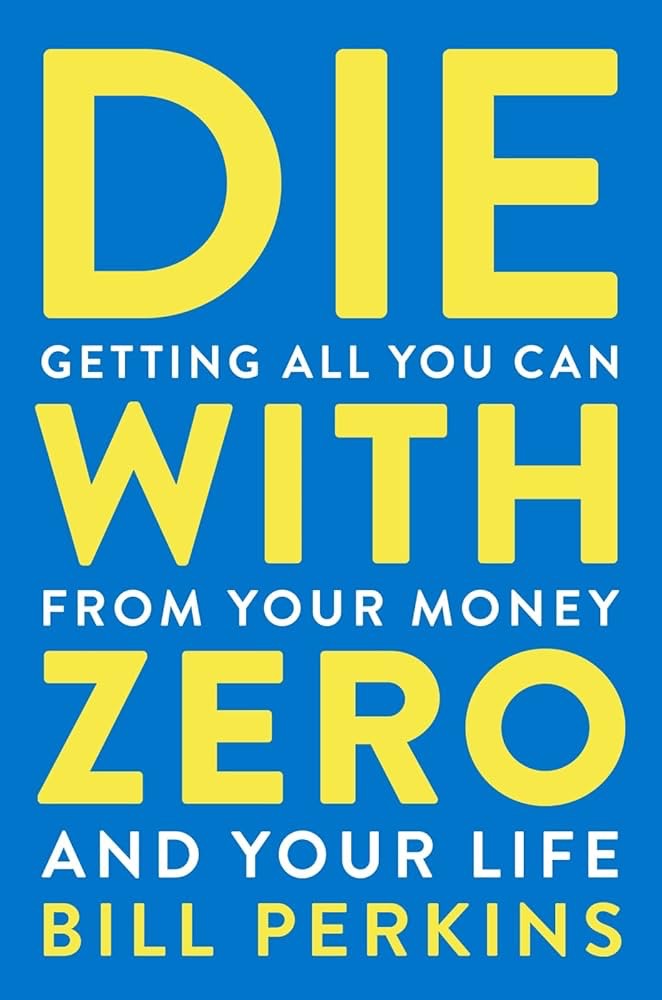
Die With Zero by Bill Perkins challenges that entire framework.
Instead of maximizing the size of your bank account, Perkins argues that you should maximize the quality and number of meaningful life experiences.
The goal is not to die rich. The goal is to use money as a tool to build the best life possible while you are still healthy enough to enjoy it.
This review explores the book’s main ideas, strengths, weaknesses, and whether its philosophy makes sense in today’s world.
What Is Die With Zero About?
At its core, the book argues that money has the highest value at specific points in your life.
Saving endlessly without spending on experiences during your healthiest years can lead to regret later.
Perkins introduces the concept of “experience optimization.”
Rather than hoarding wealth, you should plan your finances to create the most meaningful experiences at the right stages of life.
The book focuses on three main ideas:
Time is more valuable than money Experiences compound through memories Spending should be optimized across your lifetime
This approach challenges traditional financial advice that emphasizes extreme frugality.
The Most Important Lessons in the Book
1. Experiences Create Memory Dividends
Perkins argues that experiences provide ongoing returns through memories.
For example:
A trip taken at 30 can generate decades of positive memories, stories, and emotional value.
These “memory dividends” continue paying off long after the money is spent.
This concept reframes spending as an investment in life satisfaction.
2. Health Declines Faster Than Wealth
One of the strongest arguments in the book is the relationship between health and time.
You may have more money at 65 than you did at 35, but your physical ability to fully enjoy experiences may decline.
Waiting too long to enjoy life can reduce the value of your wealth.
This encourages intentional planning rather than blind accumulation.
3. Plan to Spend Down Your Money
The title concept is straightforward: aim to use most of your wealth before you die.
Instead of leaving large unused savings, Perkins suggests:
Giving money to family earlier Investing in meaningful experiences Avoiding excessive hoarding of wealth
The idea is not reckless spending but intentional use.
4. Time Buckets for Life Planning
Perkins recommends dividing your life into “time buckets.”
Each phase of life has experiences best suited for that age and level of health.
For example:
Adventure travel in your 20s and 30s Family experiences in your 30s and 40s Mentorship and legacy building later in life
Planning spending around these windows ensures opportunities are not missed.
Strengths of Die With Zero
Unique perspective on personal finance Focus on balancing wealth and life experiences Memorable concepts like memory dividends Challenges traditional saving culture Encourages intentional life design
The book stands out because it reframes money as a tool rather than a scoreboard.
For readers focused on maximizing life satisfaction, the ideas are refreshing.
Weaknesses of Die With Zero
The philosophy assumes a relatively stable financial situation.
For individuals still struggling with debt, unstable income, or limited savings, some ideas may feel unrealistic.
Additionally, readers who strongly believe in leaving large inheritances or maximizing wealth accumulation may disagree with the premise.
The book also focuses more on philosophy than detailed financial strategies.
Is Die With Zero Worth Reading in 2026?
Yes, particularly if you:
Are focused on financial independence Want to balance saving with enjoying life Are planning long-term financial goals Are thinking about how money relates to happiness
The book works best when paired with traditional financial discipline.
It does not replace saving and investing — it reframes how and when you should use the wealth you build.
Final Verdict
Die With Zero challenges the conventional idea that accumulating the largest possible net worth is the ultimate financial goal.
Instead, it argues that the real objective should be maximizing meaningful experiences during the years you can enjoy them most.
Rating: 4.5 out of 5
It is not a typical finance book.
It is a life philosophy centered around time, health, and intentional spending.
For readers willing to rethink traditional wealth advice, it offers a powerful perspective.

 Book Reviews Online
Leave a comment