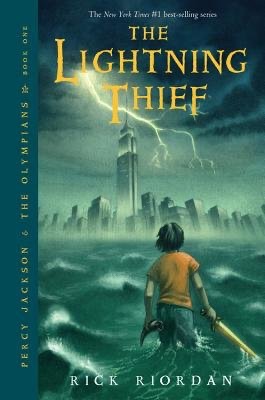
By Rick Riordan
📖 Title: The Lightning Thief (Percy Jackson & The Olympians, Book 1)
🖊️ Author: Rick Riordan
📅 Published: 2005
📚 Genre: Fantasy, Young Adult, Mythology
⭐ Rating: ★★★★★ (5/5)
Introduction
Rick Riordan’s Percy Jackson & The Olympians: The Lightning Thief is an exciting modern twist on Greek mythology, blending action, humor, and adventure into a fast-paced coming-of-age story. First published in 2005, this book introduces readers to Percy Jackson, a 12-year-old boy who discovers he is the demigod son of Poseidon.
Aimed at young readers but beloved by all ages, The Lightning Thief is the first book in the Percy Jackson series, which has since expanded into a larger universe of mythology-based adventures. Riordan’s ability to merge ancient myths with contemporary settings makes this book a must-read for fantasy lovers, especially those interested in Greek mythology.
Plot Summary
Percy Jackson has never fit in. He struggles in school due to dyslexia and ADHD, gets into trouble frequently, and has never known his father. However, after a series of strange events—including a terrifying encounter with a fury disguised as a math teacher—Percy learns that he is not an ordinary boy but a demigod.
His best friend, Grover, is revealed to be a satyr tasked with protecting him, and his mother, Sally, is taken by a Minotaur during their escape to Camp Half-Blood, a sanctuary for demigod children. At camp, Percy meets:
- Annabeth Chase – A daughter of Athena, intelligent and skilled in combat.
- Luke Castellan – A son of Hermes who mentors Percy.
- Chiron – A wise centaur and camp instructor.
Percy soon discovers that Zeus’s master lightning bolt has been stolen, and he is the prime suspect. To prevent a war among the gods, Percy, Annabeth, and Grover embark on a quest to retrieve the bolt. Their journey takes them across the United States, leading to encounters with mythological creatures such as Medusa, the Chimera, and Ares, the god of war.
Through thrilling battles, surprising betrayals, and newfound friendships, Percy uncovers a sinister plot that suggests the theft is part of a larger war brewing among the Olympians. The novel ends with a shocking betrayal by Luke, setting the stage for the greater conflict in the series.
Themes & Analysis
1. Identity and Self-Discovery
Percy’s journey is not just about retrieving the lightning bolt but also about discovering his own identity. As a demigod, he struggles with the idea of belonging—he doesn’t fit into the mortal world, but he also doesn’t fully belong in the divine world. His realization that he is Poseidon’s son helps him embrace his strengths and flaws.
Riordan beautifully captures the struggles of adolescence through Percy’s character, making the story relatable to young readers who feel out of place or misunderstood.
2. Friendship and Loyalty
Percy’s bond with Annabeth and Grover is at the heart of the novel. Despite coming from different backgrounds, they rely on each other and demonstrate unwavering loyalty. Their dynamic mirrors classic hero trios like Harry, Ron, and Hermione, with each character bringing unique skills to the team.
Grover’s dream of finding the lost god Pan and Annabeth’s desire to prove herself to her mother, Athena, add depth to their motivations, making them more than just sidekicks.
3. Greek Mythology in a Modern Setting
One of Riordan’s greatest strengths is his ability to seamlessly integrate Greek mythology into modern-day America. The gods, monsters, and myths are reimagined in contemporary settings:
- Mount Olympus is located at the top of the Empire State Building.
- Hades resides in the underworld beneath Los Angeles.
- The Lotus Casino, a reference to Homer’s Odyssey, traps visitors in an eternal pleasure state.
This clever modernization makes mythology accessible and engaging for young readers, sparking interest in ancient stories while keeping them fresh and entertaining.
4. The Power of Choice and Fate
The novel explores the tension between fate and free will. The Oracle at Camp Half-Blood gives prophecies, suggesting that the characters have predetermined destinies. However, Percy consistently makes his own choices, defying expectations. This theme becomes even more central in later books, as the demigods struggle against their predetermined fates.
Symbolism
Riordan infuses the novel with powerful symbols that enrich its meaning:
- Percy’s Sword, Riptide (Anaklusmos): A pen that transforms into a celestial bronze sword, symbolizing the hidden potential in ordinary objects.
- The Lightning Bolt: Represents divine power, justice, and the balance of the gods. Its theft symbolizes the chaos that ensues when power is misused.
- Water: As the son of Poseidon, Percy’s connection to water represents strength, renewal, and emotional depth. His ability to control water mirrors his growing self-confidence.
Writing Style and Narrative Techniques
Riordan’s writing is engaging, fast-paced, and filled with humor, making it highly appealing to young readers.
- First-Person Perspective: Told through Percy’s witty, sarcastic voice, the novel feels personal and immersive. His humorous narration makes even the darkest moments enjoyable.
- Modern Language and References: Unlike traditional mythology, which often feels distant and formal, The Lightning Thief uses modern slang and pop culture references to make ancient myths feel relevant.
- Action-Packed Pacing: There’s never a dull moment—the story moves quickly from one adventure to the next, keeping readers hooked.
Impact and Legacy
Since its release, The Lightning Thief has sparked an entire literary universe, including multiple book series, spin-offs, and adaptations. It has been credited with reigniting interest in Greek mythology among young readers and is often compared to Harry Potter in terms of its cultural impact.
The novel was adapted into a 2010 movie, which, unfortunately, received mixed to negative reviews from fans due to its significant departures from the book. However, a highly anticipated Disney+ TV series is currently in development, promising to stay more faithful to the source material.
Beyond entertainment, The Lightning Thief has had a profound impact on young readers, especially those with learning disabilities. Riordan, inspired by his own son’s struggles with dyslexia and ADHD, created Percy as a hero with these traits, showing that they can be strengths rather than weaknesses.
Final Thoughts
The Lightning Thief is a thrilling, humorous, and deeply engaging novel that blends mythology with modern adventure. Rick Riordan’s ability to create relatable characters, build an immersive world, and inject humor into mythology makes this book a standout in young adult literature. Whether you’re a teen looking for an exciting fantasy or an adult revisiting childhood favorites, Percy’s story is an unforgettable ride.
📢 Who Should Read It?
✅ Fans of mythology and fantasy adventures.
✅ Readers who enjoy humorous, fast-paced storytelling.
✅ Anyone looking for a modern, engaging take on Greek mythology.
💬 What’s your favorite moment from The Lightning Thief? Let’s discuss! ⬇️


 Book Reviews Online