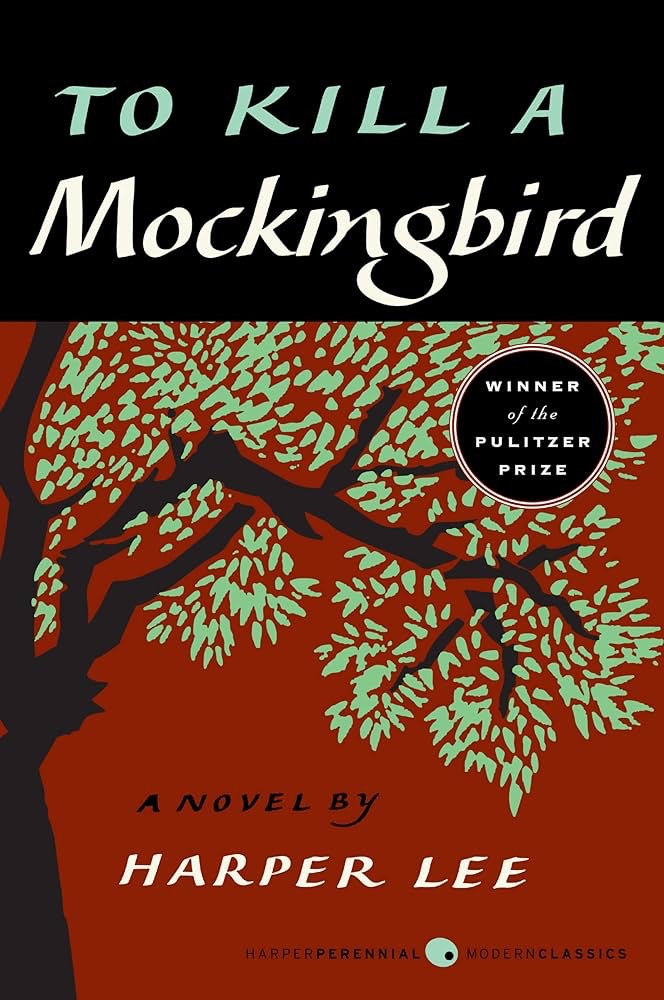
By Harper Lee
Book Review: To Kill a Mockingbird by Harper Lee
📖 Title: To Kill a Mockingbird
🖊️ Author: Harper Lee
📅 Published: 1960
📚 Genre: Southern Gothic, Coming-of-Age, Legal Drama
⭐ Rating: ★★★★★ (5/5)
Introduction
Harper Lee’s To Kill a Mockingbird is one of the most influential and celebrated novels in American literature. First published in 1960, the book quickly became a classic, renowned for its powerful themes of racial injustice, morality, and the loss of innocence. Set in the 1930s in the fictional town of Maycomb, Alabama, the novel follows young Scout Finch as she navigates a world shaped by prejudice, class divisions, and deep-seated racism.
Through the eyes of Scout, the novel presents both the beauty and the cruelty of human nature, using a compelling and deeply personal narrative to explore themes of justice, empathy, and integrity. At the heart of the story is her father, Atticus Finch, a principled lawyer who defends a Black man falsely accused of assaulting a white woman. To Kill a Mockingbird is both a poignant coming-of-age story and a profound critique of societal flaws that remain relevant today.
Plot Summary
The novel is set in the fictional town of Maycomb, Alabama, during the Great Depression. It is narrated by Jean Louise “Scout” Finch, a curious and outspoken six-year-old girl. She lives with her older brother, Jem, and their widowed father, Atticus Finch, a respected lawyer.
The story revolves around two major plotlines:
- The Trial of Tom Robinson:
- Atticus Finch is appointed to defend Tom Robinson, a Black man falsely accused of raping Mayella Ewell, a white woman.
- Despite clear evidence proving Tom’s innocence, the deep-rooted racism of the town makes the trial an uphill battle.
- Atticus presents a compelling defense, exposing the contradictions in the Ewells’ testimony. However, the all-white jury convicts Tom, who later attempts to escape and is shot dead.
- The Mystery of Boo Radley:
- Scout, Jem, and their friend Dill are fascinated by their reclusive neighbor, Arthur “Boo” Radley.
- The children create myths about him, believing he is a ghostly figure who never leaves his house.
- As the novel progresses, Boo subtly reveals his kindness by leaving gifts in a tree for the children and ultimately saves them from an attack by Bob Ewell, Mayella’s vengeful father.
- The revelation of Boo’s humanity contrasts with the prejudices that the town holds against outsiders.
The novel concludes with Scout learning the importance of empathy and understanding, as she finally sees the world from Boo’s perspective.
Themes & Analysis
1. Racial Injustice
The trial of Tom Robinson is the novel’s central event, illustrating the deep-seated racism of the American South. Despite Atticus’s clear and logical defense, the jury convicts Tom simply because of his race. His wrongful conviction and tragic death highlight the failures of the legal system and the brutal reality of racial prejudice.
Lee uses Tom’s story to critique a society that upholds injustice under the guise of tradition. The novel forces readers to confront the consequences of racism and the moral responsibility to fight against it.
2. The Loss of Innocence
Both Scout and Jem experience a loss of innocence as they come to understand the complexities of human nature. At the beginning of the novel, they believe in the fairness of the world. However, Tom’s trial and conviction shatter their naïve belief in justice.
Jem, in particular, is deeply affected by the verdict, struggling to reconcile the reality of injustice with the values Atticus has taught him. Scout, though younger, also begins to see the world in a more nuanced way, learning that people are not always as they seem.
3. Empathy and Moral Growth
Atticus Finch serves as the novel’s moral center, teaching his children the importance of empathy and integrity. One of the book’s most famous lines—“You never really understand a person until you consider things from his point of view… until you climb into his skin and walk around in it.”—captures its central message.
Throughout the novel, Scout learns to apply this lesson, ultimately understanding Boo Radley not as a frightening figure, but as a kind, protective presence. Her growth symbolizes the power of empathy to break down prejudices and misconceptions.
4. Class and Social Hierarchies
Beyond race, the novel also examines class divisions in Maycomb. The Finches are well-respected, but others, like the Cunninghams and the Ewells, occupy lower social positions.
- The Cunninghams are poor but hardworking, refusing to take what they cannot repay.
- The Ewells, on the other hand, live in poverty but are dishonest and abusive, using their race as a weapon against Tom Robinson.
Through these characters, Lee explores the intersection of race, class, and morality, showing that wealth does not equate to virtue, nor does poverty excuse cruelty.
Symbolism
Lee uses powerful symbols to reinforce the novel’s themes:
- The Mockingbird: Represents innocence and goodness. Atticus tells his children, “It’s a sin to kill a mockingbird,” because they do no harm. Both Tom Robinson and Boo Radley serve as human mockingbirds—innocent figures harmed by society’s prejudices.
- Boo Radley’s House: Symbolizes fear of the unknown. The children’s evolving perception of Boo mirrors their moral growth.
- Atticus’s Glasses: Represent wisdom and justice. When he removes them in court, it symbolizes his readiness to fight for truth.
- The Camellia Flower: Given to Jem by Mrs. Dubose, the flower represents forgiveness and moral courage.
Writing Style and Narrative Techniques
Lee’s writing style is accessible yet profound, using simple language to convey complex themes.
- First-Person Perspective: Told from Scout’s point of view, the novel captures both childhood innocence and mature reflection.
- Southern Gothic Elements: The eerie presence of Boo Radley and the town’s hidden darkness add depth to the setting.
- Blending of Humor and Seriousness: While the novel deals with heavy themes, it also includes moments of warmth and humor, making it deeply engaging.
Impact and Legacy
Since its publication, To Kill a Mockingbird has remained one of the most widely read and studied novels in American literature. It has been praised for its powerful storytelling and moral depth, but also faced criticism, particularly regarding its portrayal of race. Some argue that it presents a simplistic view of racism, focusing on a white savior narrative rather than centering Black voices.
Despite these debates, the novel continues to be a touchstone for discussions on justice, empathy, and moral courage. Its themes remain relevant, making it a timeless classic that speaks to generations of readers.
Final Thoughts
To Kill a Mockingbird is more than just a novel—it is a profound exploration of justice, morality, and human nature. Through Scout’s journey, readers are challenged to question their own prejudices and consider the power of empathy. Harper Lee’s masterpiece continues to inspire and educate, making it an essential read for literature lovers and social thinkers alike.
📢 Who Should Read It?
✅ Readers who enjoy classic literature with deep moral themes.
✅ Those interested in social justice and historical perspectives on race.
✅ Fans of character-driven coming-of-age stories.
💬 What are your thoughts on Atticus Finch’s moral lessons? Do you think the novel remains relevant today? Let’s discuss! ⬇️

 Book Reviews Online