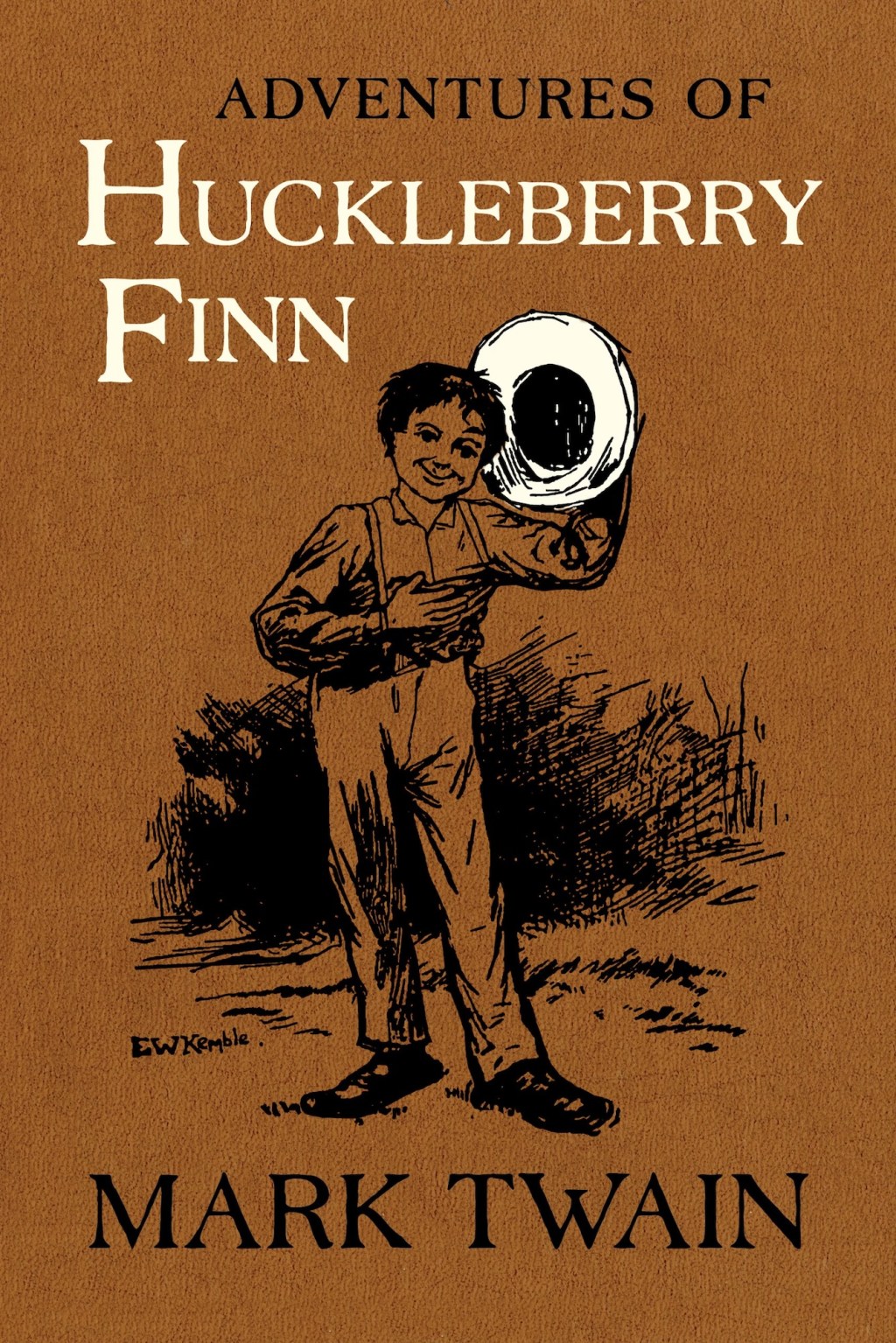
By Mark Twain
Introduction
Few novels have left as profound an impact on American literature as Adventures of Huckleberry Finn. Written by Mark Twain and published in 1885, this novel has been praised for its vivid storytelling, sharp satire, and deep social commentary. At its heart, the book is an adventure story, following young Huck Finn as he embarks on a journey down the Mississippi River with Jim, an enslaved man seeking freedom. However, beneath its surface, Adventures of Huckleberry Finn is a powerful critique of race, morality, and society in pre-Civil War America.
While the novel has sparked controversy due to its use of racial slurs and portrayal of certain characters, it remains one of the most important works in American literature. Twain masterfully weaves humor, adventure, and a deep exploration of human nature into a novel that continues to resonate with readers more than a century after its publication.
Plot Summary
The novel is a sequel to The Adventures of Tom Sawyer and follows Huck Finn, who has been taken in by the Widow Douglas and Miss Watson. The two women attempt to “civilize” Huck, teaching him manners, religion, and proper behavior. However, Huck feels trapped by their rules and longs for freedom.
Huck’s life takes a dramatic turn when his abusive, alcoholic father, Pap, returns and kidnaps him. Locked in a remote cabin, Huck eventually escapes by faking his own death. He flees to Jackson’s Island, where he unexpectedly encounters Jim, Miss Watson’s enslaved man, who has run away to avoid being sold.
Huck and Jim decide to travel down the Mississippi River on a raft, hoping to reach Cairo, Illinois, where Jim can gain his freedom. Along the way, they experience various adventures and encounters, including:
- A deadly feud between the Grangerfords and the Shepherdsons
- The schemes of two con artists, the Duke and the King, who manipulate and rob people
- Jim’s capture by the Phelps family, leading to a rescue attempt orchestrated by Tom Sawyer
Through these experiences, Huck grapples with questions of morality, loyalty, and the values he has been taught. The novel concludes with Jim gaining his freedom and Huck deciding to leave civilization behind once more, heading west in search of a new life.
Themes & Analysis
1. Freedom vs. Civilization
One of the central themes of the novel is the conflict between freedom and civilization. Huck’s desire to escape the confines of “civilized” life represents a broader rejection of societal norms. While society claims to be moral and just, it upholds deeply flawed institutions like slavery. Huck finds true freedom not in society but on the river, away from the rules and expectations of the world around him.
Similarly, Jim’s journey is one of literal freedom. He risks everything to escape slavery, seeking the right to live as a free man. His quest highlights the cruelty of a society that treats human beings as property.
2. Moral Growth and Conscience
Huck’s moral development is at the core of the novel. Raised in a racist society, Huck initially sees Jim as inferior. However, as they travel together, Huck comes to recognize Jim’s humanity, kindness, and intelligence.
One of the most powerful moments in the novel occurs when Huck believes he is committing a sin by helping Jim escape. Society has taught him that aiding an enslaved person is wrong, but his personal experiences tell him otherwise. In a defining moment, he chooses to go against everything he has been taught, famously declaring, “All right, then, I’ll go to hell!”
This moment marks Huck’s full moral transformation. He rejects the societal norms that condone slavery and instead follows his own sense of right and wrong.
3. Satire and Social Criticism
Twain uses satire to expose the hypocrisy, ignorance, and cruelty of society. He mocks the idea that people who consider themselves “respectable” can uphold unjust institutions.
For example, the feud between the Grangerfords and the Shepherdsons highlights the absurdity of senseless violence. Despite being wealthy and educated, both families continue their bloodshed without questioning why they are fighting.
Similarly, the characters of the Duke and the King show how easily people can be manipulated. The two con artists trick entire towns into believing their absurd lies, emphasizing how gullible and easily deceived people can be.
4. Friendship and Loyalty
The bond between Huck and Jim is the heart of the novel. Despite their differences in age, race, and background, they develop a deep and genuine friendship. Jim acts as a father figure to Huck, protecting and guiding him. In turn, Huck comes to see Jim as a true friend, not just someone society deems inferior.
Their relationship challenges the racist beliefs of the time and demonstrates the power of human connection. Huck’s decision to help Jim, even when it goes against everything he has been taught, is a testament to the strength of their friendship.
Writing Style and Narrative Techniques
Twain’s writing style is distinctive, marked by:
- Regional Dialects: Twain captures the speech patterns of different characters, making the novel feel authentic and immersive. While some modern readers may find the dialects challenging, they add to the realism of the setting.
- First-Person Perspective: The story is told through Huck’s eyes, giving readers direct insight into his thoughts, feelings, and moral dilemmas.
- Humor and Satire: Twain balances serious social critique with humor, making even the darkest moments of the novel engaging and thought-provoking.
Impact and Controversy
Adventures of Huckleberry Finn has been both celebrated and criticized since its publication. Many consider it one of the greatest American novels due to its rich storytelling and deep themes. However, it has also been the subject of controversy, particularly regarding its use of racial slurs and portrayal of race.
While some argue that the novel is offensive, others believe it is an anti-racist work that exposes the injustices of slavery. Twain’s depiction of Jim is groundbreaking for its time, as he is shown to be intelligent, compassionate, and deserving of freedom. However, some critics feel that the novel’s ending undermines its serious themes by reverting to a comedic tone with Tom Sawyer’s elaborate rescue plan.
Despite these debates, Adventures of Huckleberry Finn remains a crucial work in American literature, offering a powerful critique of society and a timeless story of friendship, morality, and freedom.
Final Thoughts
Adventures of Huckleberry Finn is more than just an adventure novel—it is a profound exploration of human nature, morality, and the flaws of society. Twain’s storytelling, humor, and sharp social commentary make it a must-read for literature lovers.
📢 Who Should Read It?
✅ Fans of classic literature
✅ Readers who enjoy adventure and coming-of-age stories
✅ Those interested in American history and social themes
💬 What are your thoughts on Huck’s journey and Twain’s message? Let’s discuss! ⬇️